Digital hoarding is emerging as a significant psychological concern in an era defined by constant connectivity, unlimited storage, and relentless information flow. Unlike physical hoarding, which involves accumulating tangible objects, digital hoarding refers to the excessive saving of emails, photos, files, messages, tabs, and online content that individuals struggle to delete. As cloud storage and devices make saving effortless, the boundary between useful information and unnecessary accumulation has blurred, creating new challenges for mental health and daily functioning.
What makes digital hoarding particularly concerning is how normalized it has become. Many people feel compelled to keep everything “just in case,” driven by fear of loss, productivity anxiety, or emotional attachment to digital memories. Over time, this behavior contributes to data overload, where the sheer volume of stored information becomes overwhelming rather than helpful. As digital environments increasingly shape online behavior, researchers are beginning to recognize digital hoarding as more than a habit, but a pattern with real psychological implications.
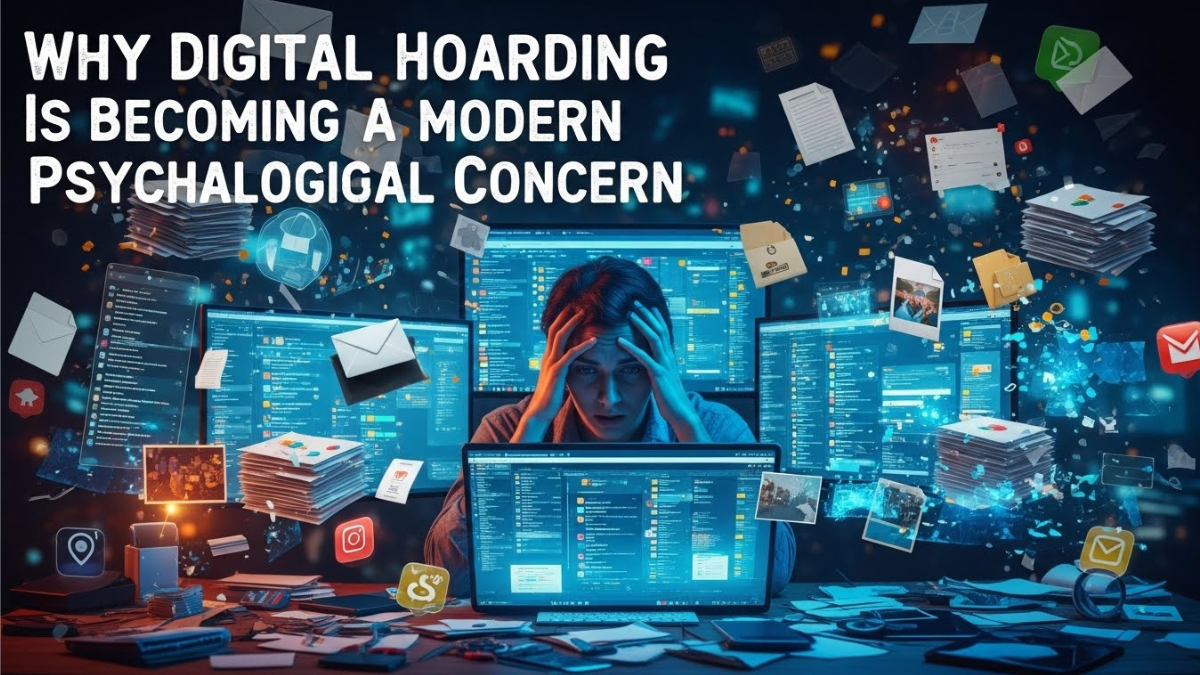
Data overload and the psychology behind digital accumulation
At the core of digital hoarding lies data overload, a condition where the brain is exposed to more information than it can effectively process or manage. Notifications, emails, downloads, screenshots, and saved links accumulate faster than individuals can organize or review them. This overload creates cognitive strain, making decision-making, focus, and prioritization more difficult.
Psychologically, digital hoarding is often reinforced by avoidance. Deleting files requires decisions about value and relevance, which can trigger anxiety or regret. To escape this discomfort, individuals postpone sorting and deleting, worsening data overload over time. This cycle directly affects mental health, increasing stress and reducing a sense of control over one’s digital environment. As a result, online behavior shifts toward constant saving and minimal curation.
Impact of digital hoarding on mental health
The relationship between digital hoarding and mental health is increasingly evident. Excessive digital clutter can contribute to anxiety, reduced productivity, and persistent feelings of overwhelm. When inboxes contain thousands of unread emails or devices hold years of unsorted files, individuals may experience guilt, avoidance, and mental fatigue.
Over time, digital hoarding can mirror symptoms associated with anxiety disorders and compulsive behaviors. The inability to discard digital content, even when it has no practical value, reflects emotional attachment and fear of loss. This pattern intensifies data overload, which further strains mental health by fragmenting attention and increasing cognitive load. The cumulative effect is a diminished ability to focus, reflect, and engage meaningfully with digital tools.
Online behavior and the role of technology design
Modern online behavior is heavily influenced by platforms designed to encourage saving, bookmarking, archiving, and infinite scrolling. These design choices unintentionally reinforce digital hoarding by removing friction from accumulation while offering little incentive for deletion. Cloud storage, auto-save features, and unlimited photo backups normalize keeping everything, regardless of relevance.
As online behavior adapts to these systems, users internalize the idea that digital space is limitless and harmless. However, the psychological cost of unmanaged accumulation is significant. Digital hoarding thrives in environments where organization is optional and deletion feels irreversible. Addressing data overload therefore requires not only individual behavior change but also more mindful technology design that supports healthy mental health outcomes.
Key factors contributing to digital hoarding include:
- Fear of losing important information
- Emotional attachment to digital memories
- Unlimited storage reducing deletion urgency
- Habitual saving driven by online behavior
- Increasing data overload from constant input
The table below compares digital hoarding with healthy digital management habits:
| Aspect | Digital Hoarding | Healthy Digital Use |
|---|---|---|
| File accumulation | Excessive and unmanaged | Purposeful and curated |
| Data overload | High and stressful | Minimal and controlled |
| Mental health impact | Anxiety and overwhelm | Clarity and focus |
| Online behavior | Save-first mindset | Review-and-delete habit |
| Sense of control | Low | High |
Long-term consequences and awareness
If left unaddressed, digital hoarding can have long-term consequences for productivity, emotional well-being, and decision-making. Persistent data overload reduces the brain’s ability to prioritize and recall information effectively. This can impair work performance and personal organization, reinforcing stress cycles that negatively affect mental health.
Raising awareness about digital hoarding is an important first step toward change. Just as physical decluttering gained popularity due to its psychological benefits, digital decluttering is increasingly recognized as essential for healthier online behavior. By intentionally reviewing and reducing digital accumulation, individuals can regain control, reduce data overload, and support long-term mental health.
Conclusion
In conclusion, digital hoarding is becoming a modern psychological concern because it quietly undermines focus, emotional balance, and well-being. Fueled by data overload, reinforced by modern online behavior, and closely linked to mental health, this pattern reflects how digital environments shape human habits. Addressing digital hoarding through awareness, intentional curation, and healthier digital routines can restore clarity and reduce cognitive strain in an increasingly data-saturated world.
FAQs
What is digital hoarding?
Digital hoarding is the excessive accumulation of digital files, emails, photos, and content that individuals struggle to delete.
How does digital hoarding affect mental health?
It contributes to stress, anxiety, and overwhelm by increasing data overload and reducing cognitive clarity.
Why is data overload linked to digital hoarding?
Data overload results from unmanaged accumulation, making it harder to process and organize information.
Does technology influence online behavior related to digital hoarding?
Yes, platform designs encourage saving and archiving, shaping online behavior that supports digital hoarding.
Can digital hoarding be reduced?
Yes, through awareness, regular digital decluttering, and healthier online behavior, digital hoarding can be managed effectively.
Click here to learn more